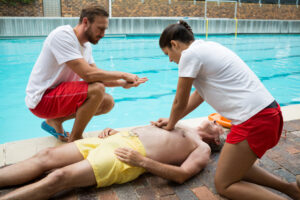
If you’re working as a pool lifeguard in Australia, your employer and state regulations will require you to hold current first aid and CPR certifications. But which one do you actually need: HLTAID009, HLTAID011, or both? The answer depends on your location, facility type, and employer policy, but there’s a clear minimum standard across the country.
The Minimum Requirement: HLTAID009 CPR
HLTAID009 (CPR) is the absolute minimum qualification for most pool lifeguards in Australia. It covers cardiopulmonary resuscitation techniques and is focused entirely on the immediate care needed when someone’s heart stops or they stop breathing. For lifeguards working in pools, this is essential because cardiac events and near-drowning incidents can happen without warning.
However, here’s the critical part: HLTAID009 is valid for only 12 months. This means every year, you need to renew your CPR certificate. Many lifeguards don’t realise this initially, especially if they also hold HLTAID011 (First Aid), which lasts for 3 years. The 12-month CPR renewal applies regardless of how long your broader first aid certificate remains current.
The Professional Standard: HLTAID011 First Aid
In reality, most professional pool lifeguards in Australia are required to hold HLTAID011 (First Aid and CPR) rather than just HLTAID009. HLTAID011 covers CPR, bleeding control, shock management, wound care, choking, and other emergency scenarios you might encounter at a pool.
State aquatic centre standards typically specify HLTAID011 as the minimum. The Aquatics and Recreation Industry Award, which covers many pool employees, references HLTAID011 as a standard requirement. Royal Life Saving Society Australia (RLSSA), the peak body for water safety in Australia, also recommends HLTAID011 for professional lifeguard roles.
HLTAID011 is valid for 3 years, but remember: the CPR component within it must still be renewed annually. So even if your HLTAID011 won’t expire for another 2 years, you’ll need to renew your CPR every 12 months.
State-Specific Requirements
While HLTAID009 or HLTAID011 is the base requirement, some states and territories have additional expectations:
State/Territory | Minimum Requirement | Additional Notes |
|---|---|---|
Queensland | Aquatics Centre Standards require HLTAID011; CPR renewal annually | |
New South Wales | Work Health & Safety Act compliance; annual CPR renewal | |
Victoria | Typical facility standard; CPR renewal annually | |
South Australia | State pool facilities typically require HLTAID011 | |
Western Australia | RLSSA guidelines recommend HLTAID011 | |
Tasmania | Common facility requirement; CPR renewal annually | |
Northern Territory | Applies to Darwin pools and facilities |
Individual employers and facility operators may impose stricter requirements than the state minimum. Always check your employment contract and facility safety policy to confirm what’s required of you.
Why the 12-Month CPR Renewal Matters
Pool environments are dynamic and high-risk. Skills degrade over time, and CPR techniques are sometimes updated based on the latest medical research. The 12-month renewal cycle ensures lifeguards stay sharp and current with best practice. More importantly, if your CPR certificate lapses, most employers won’t allow you to work in a supervisory or primary lifeguard role, even if your HLTAID011 is still technically current within its 3-year window.
Some facilities are even stricter: they ask you to renew your CPR before it expires, often within 11 months, so there’s no risk of lapse. This is especially common at larger aquatic centres and council-run facilities.
How to Renew Your Lifeguard First Aid Certificates
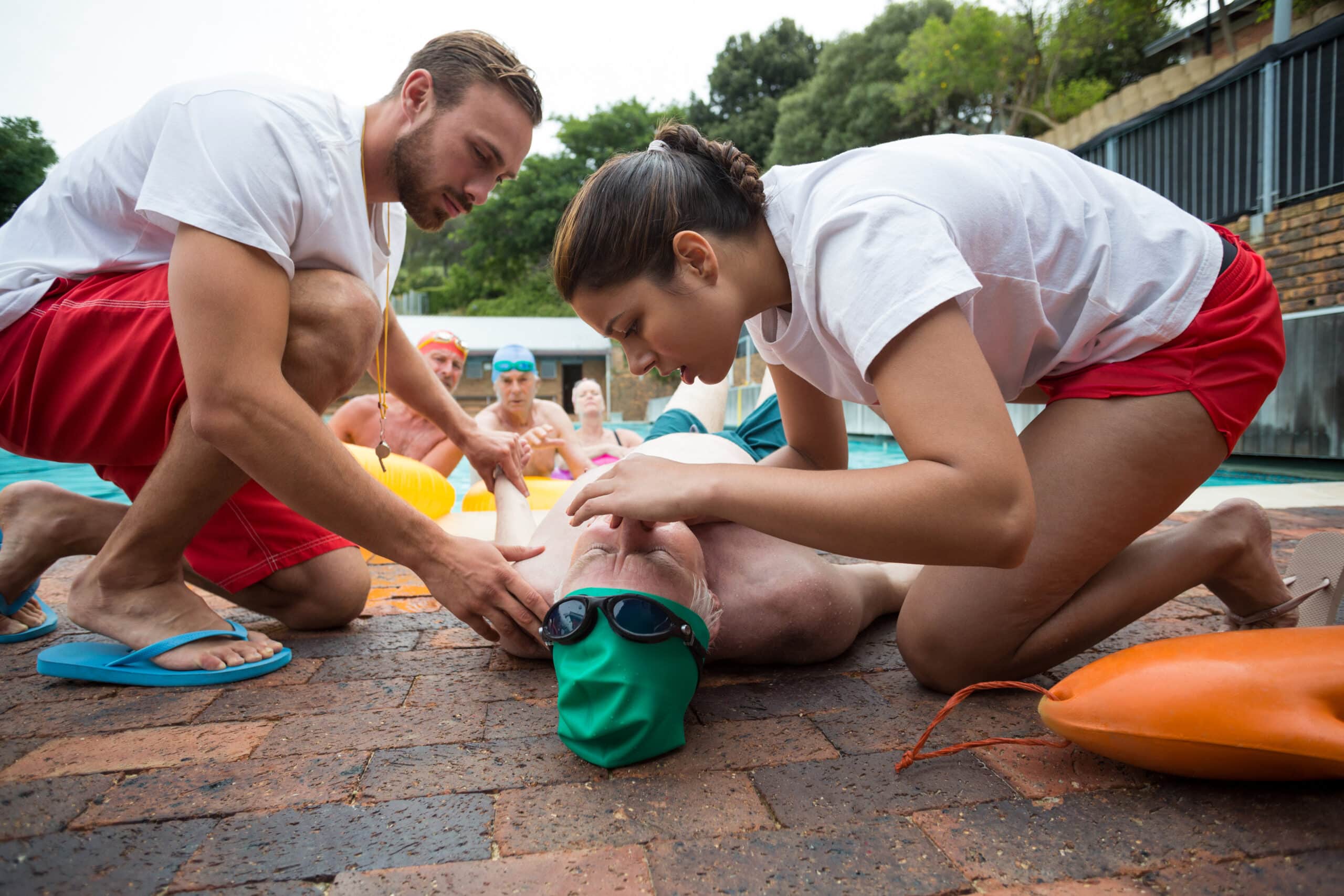
The process is straightforward with FAP First Aid. Both HLTAID009 and HLTAID011 use blended learning: you complete the online pre-learning component at your own pace, then attend a short face-to-face practical session.
For CPR renewal, FAP’s 30-minute practical is ideal for busy lifeguards. It covers the essential skills in half an hour, so you can renew your qualification without disrupting your working week. The cost is just $59.
If you need to renew your broader First Aid certificate as well, the 60-minute practical covers all the scenarios you’re likely to encounter: choking, bleeding, shock, burns, and more. That’s $109.
FAP has training locations across Australia: Queensland (Caboolture, Cannon Hill, Logan, Southport), South Australia (Adelaide, Morphett Vale, Salisbury), New South Wales (Maitland, Sydney), Victoria (Melbourne), Tasmania (Hobart, Launceston), Northern Territory (Darwin), and Western Australia (Joondalup). Sessions run 7 days a week, so you can find a time that suits your roster.
Planning Your Renewal Schedule
As a pool lifeguard, the smart approach is this:
- Start with HLTAID011 (Full First Aid) if you don’t already hold it. This is your foundation and covers everything you need for most emergencies.
- Renew your CPR (HLTAID009) every 12 months. Mark this on your calendar now to avoid lapses.
- Renew your broader First Aid (HLTAID011) every 3 years, or whenever your employer requests an earlier renewal.
If your facility requires renewal before expiry (common at large pools), book your CPR renewal within 11 months of your last qualification. FAP’s [/blog/cpr-renewal-lifeguards/](CPR renewal guide) has more tips on staying on top of your schedule.
Employer Compliance and Your Responsibility
While employers have a duty under Work Health and Safety legislation to ensure lifeguards are competent, you also have a personal responsibility to keep your certifications current. Allowing your CPR to lapse is a breach of your duty of care to patrons, and it could affect your employment status, insurance, and professional reputation.
Many pools now use digital tracking systems to monitor staff qualifications. If your certificate is about to expire, you’ll often receive a reminder. Use those reminders to book your renewal immediately, rather than waiting until the last minute.
The Bottom Line
As a pool lifeguard in Australia, you need at least HLTAID009 (CPR), but in practice, HLTAID011 (Full First Aid) is the professional standard. Your CPR must be renewed every 12 months, and your broader First Aid every 3 years. Check your employer’s specific requirements and state regulations, then keep a clear renewal schedule.
FAP First Aid makes renewal fast and convenient: book your next CPR or First Aid session at fastfirstaidcpr.com.au/calendar/. With express 30-minute CPR practicals and locations across Australia open 7 days a week, staying compliant is simpler than ever.
Related reading
- ANZCOR Guideline 10.1 – Basic Life Support Training
Australian Resuscitation Council (ARC) – Official Guidelines
ANZCOR (Australian & New Zealand Committee on Resuscitation) – Guideline 8 – Cardiopulmonary Resuscitation (CPR)
FAQ
Is HLTAID009 enough for pool lifeguards in Australia?
HLTAID009 (CPR) is the minimum legal requirement, but most professional pool lifeguards are required to hold HLTAID011 (Full First Aid and CPR) by their employer or facility. Check your specific employment contract and local facility requirements.
How often do lifeguards need to renew their CPR certificate?
CPR (HLTAID009) must be renewed every 12 months. This applies even if your HLTAID011 (Full First Aid) is still current, as the CPR component within HLTAID011 is only valid for 12 months.
How long is HLTAID011 valid for lifeguards?
HLTAID011 (Full First Aid and CPR) is valid for 3 years. However, the CPR component within it is only valid for 12 months, so you must renew your CPR annually within that 3-year window.
Do different Australian states have different lifeguard first aid requirements?
All states and territories require at least HLTAID009 (CPR), but most specify HLTAID011 (Full First Aid) as the standard for professional lifeguards. Individual employers may have stricter requirements, so always check your facility’s policy.
How long does a CPR renewal take?
FAP First Aid’s CPR renewal practical takes just 30 minutes face-to-face. You’ll complete the online pre-learning beforehand, then attend the short practical session.