
If you work in aged care in Australia, annual CPR renewal is not optional, it’s a regulatory requirement. The HLTAID009 CPR certificate is valid for 12 months only, and most aged care employers mandate current certification as a condition of employment and part of their duty of care to residents. This guide explains what you need to know about CPR renewal, why it’s required, and how to get certified in just 30 minutes.
Why CPR Renewal is Mandatory for Aged Care Workers
Under the Aged Care Quality Standards, Standard 8 (Human Resources) requires aged care providers to ensure staff are appropriately trained and qualified. This includes maintaining current first aid and CPR credentials. The rationale is straightforward: aged care residents are among the most vulnerable members of society, and the likelihood of a cardiac emergency requiring CPR is significantly higher in aged care settings than in the general population.
Beyond regulatory compliance, aged care providers have a duty of care to residents and their families. A current CPR certification demonstrates that your skills are up to date and that you can respond effectively in a life-threatening emergency. Many aged care facilities treat annual CPR renewal as non-negotiable for employment purposes, and some explicitly state it in their enterprise agreements or staff handbooks.
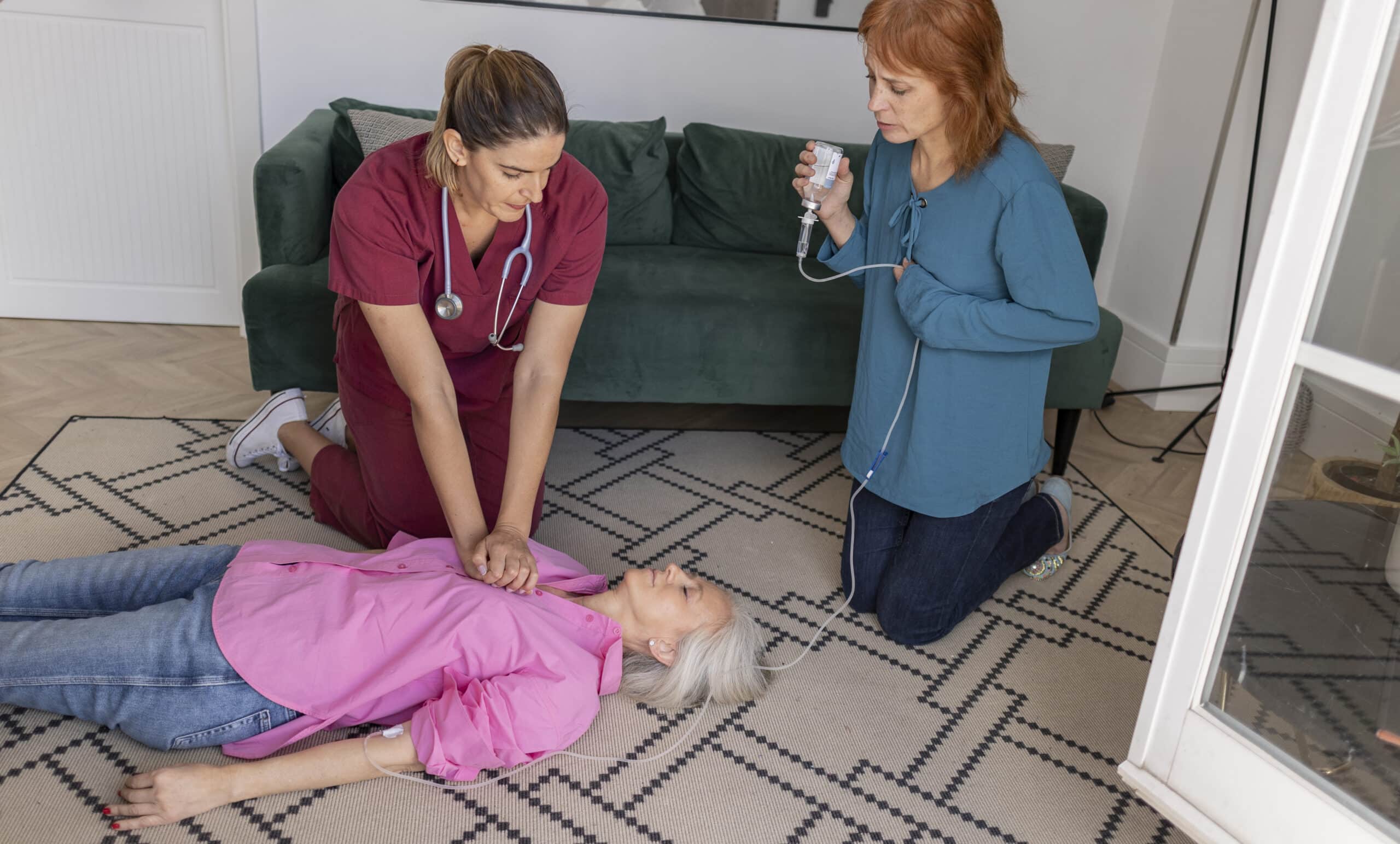
HLTAID009 CPR: The Standard for Aged Care
HLTAID009 is the nationally recognised unit of competency for CPR delivered by the Australian government training system. It covers adult CPR, including the use of an Automated External Defibrillator (AED), rescue breathing, and recovery position. The certificate is valid for 12 months from the date of completion.
Most aged care employers require HLTAID009 at minimum. Some larger organisations or those with higher acuity residents also require HLTAID011 (full First Aid), which includes wound management, choking, and other first aid scenarios common in aged care. Whether you need one or both depends on your employer’s policy and your specific role.
Additional Considerations for Registered Nurses and Enrolled Nurses

If you are an Authorised Nursing Professional (ANP) or work as a Registered Nurse (RN) or Enrolled Nurse (EN) in aged care, you also have continuing professional development (CPD) obligations under the Australian Health Practitioner Regulation Agency (AHPRA). While AHPRA does not prescribe CPR as the only pathway to meet CPD requirements, annual CPR renewal is widely accepted as evidence of ongoing professional development in the aged care context. Many health services and aged care providers expect AHPRA-regulated workers to hold current, nationally recognised qualifications like HLTAID009.
NDIS Overlap: If You Also Provide NDIS Services
Some aged care workers also provide services to people with disability under the National Disability Insurance Scheme (NDIS). If you fall into this category, you should be aware that NDIS registered providers typically require their support workers to hold current CPR certification as well. This means a single HLTAID009 certificate serves both your aged care employer and your NDIS provider, provided both accept the unit code as meeting their requirements.
The Express CPR Renewal Advantage
Renewing your CPR doesn’t have to mean taking a full day off work or waiting months for a training provider to schedule a course. FAP First Aid offers a 30-minute practical CPR session, which is perfect for busy aged care professionals. The blended learning model means you complete your online pre-learning at your own pace before attending your 30-minute face-to-face practical.
This express approach is particularly valuable for aged care workers who often work shifts, have limited time off, or prefer to renew during their scheduled rostered days off. The Statement of Attainment is issued on the same day, so you leave the session with a valid certificate in hand.
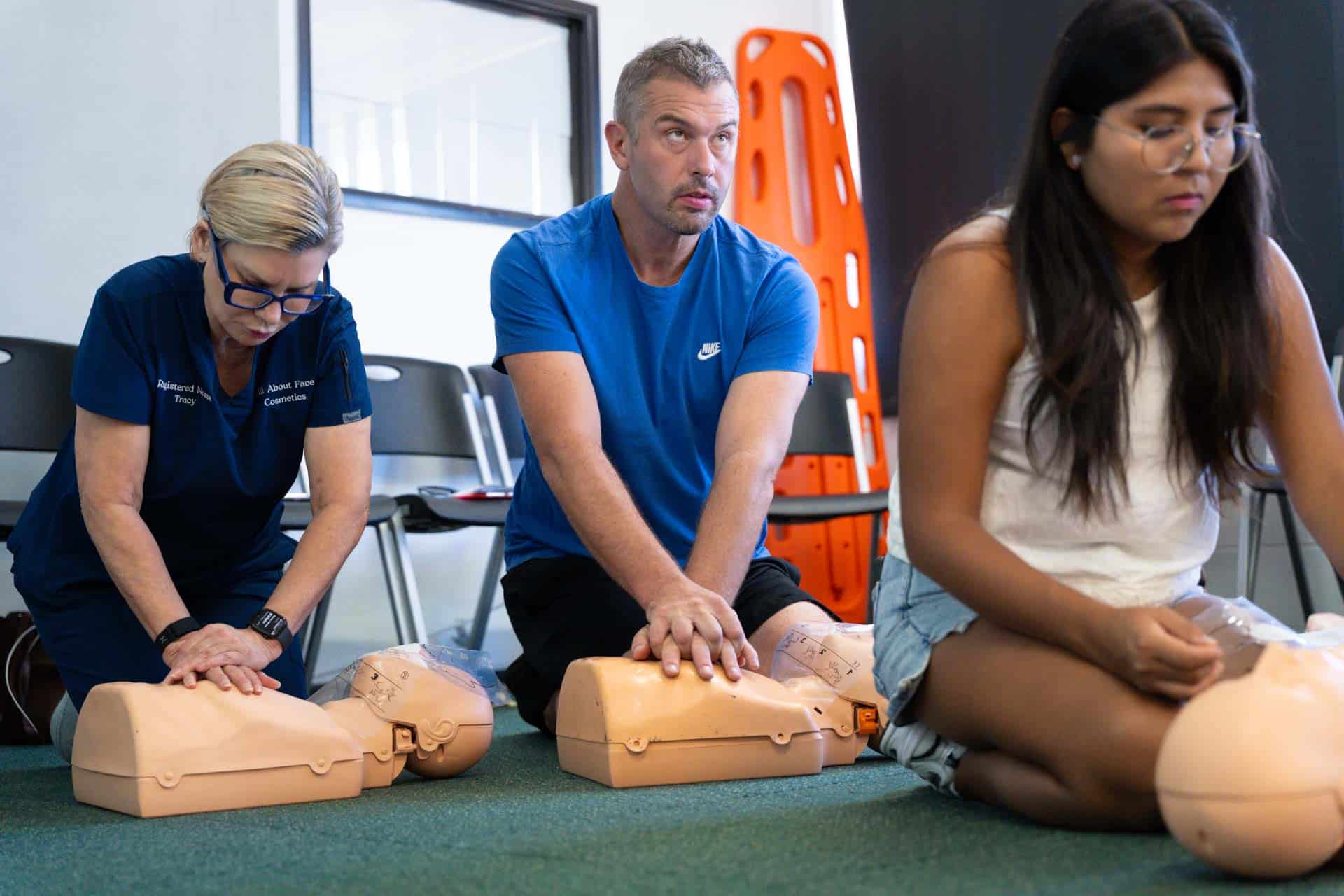
How to Renew Your CPR Certificate
Renewing your HLTAID009 is straightforward:
- Book your session at a time and location that suits you. FAP First Aid operates 7 days a week across Australia, with locations in Queensland, South Australia, New South Wales, Victoria, Tasmania, Northern Territory, and Western Australia.
- Complete your online pre-learning before your practical session.
- Attend your 30-minute face-to-face CPR practical.
- Receive your Statement of Attainment immediately.
The cost is $59 for HLTAID009 CPR. If your employer also requires HLTAID011 (full First Aid), the cost is $109, and the practical takes 60 minutes.
Planning Your Renewal
Don’t wait until your certificate expires to book your renewal. Start planning when you have 4 to 6 weeks remaining on your current certificate. This gives you time to find a session that works with your roster and ensures you maintain continuous, valid certification.
Many aged care workers set a reminder on their phone or calendar when they first obtain their CPR certificate, noting the expiry date and setting a further reminder 6 weeks beforehand to book their renewal. This simple practice ensures you never fall out of compliance.
Credential | Duration | Practical Time | Cost |
|---|---|---|---|
12 months | 30 minutes | $59 | |
36 months | 60 minutes | $109 | |
36 months | 90 minutes | $129 |
Related reading
- ANZCOR: Guideline 8 – Cardiopulmonary Resuscitation (CPR)
- Better Health Channel: Cardiopulmonary resuscitation (CPR)
- Healthdirect: How to perform CPR – on adults, children and babies
- First Aid Pro: CPR and AED: Why They’re Critical for Saving Lives in Emergencies
FAQ
How often do aged care workers need to renew CPR?
Aged care workers need to renew their CPR (HLTAID009) certificate every 12 months. The certificate is valid for exactly 12 months from the date of completion, and most aged care employers mandate annual renewal as a condition of employment.
Is HLTAID009 the only first aid qualification required in aged care?
HLTAID009 (CPR) is the minimum requirement in most aged care settings. However, some aged care providers also require HLTAID011 (full First Aid), which covers wound management, choking, and other first aid scenarios. Check your employer’s policy to confirm what qualifications you need.
Can I renew my CPR in 30 minutes?
Yes. FAP First Aid offers a 30-minute face-to-face CPR practical session, which is ideal for busy aged care workers. You complete your online pre-learning at your own pace, then attend the 30-minute practical to refresh your skills and receive your updated Statement of Attainment.
Do AHPRA-regulated nurses need HLTAID009 in aged care?
Yes. Registered Nurses (RNs) and Enrolled Nurses (ENs) working in aged care should hold current HLTAID009 certification. While AHPRA does not prescribe CPR as the only CPD pathway, annual renewal is widely accepted by aged care providers and aligns with AHPRA CPD expectations.
Where can I renew my CPR certificate in aged care?
FAP First Aid has locations across Australia: Queensland (Caboolture, Cannon Hill, Logan, Southport), South Australia (Adelaide, Morphett Vale, Salisbury), New South Wales (Maitland, Sydney), Victoria (Melbourne), Tasmania (Hobart, Launceston), Northern Territory (Darwin), and Western Australia (Joondalup). You can book your session at fastfirstaidcpr.com.au/calendar/