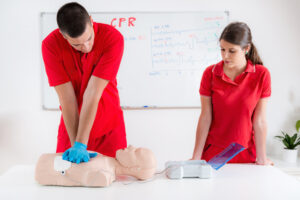
Every National Skills Week reminds Australians that practical skills keep our workplaces, industries and communities functioning effectively and safely every day. Among the many capabilities celebrated during the week, workplace first aid stands apart because it is relevant in virtually every occupation. Whether you work in construction, education, healthcare, hospitality, retail, manufacturing or an office environment, knowing how to respond when someone becomes ill or injured is a skill that can protect lives, reduce the severity of injuries and give colleagues confidence when every second counts.
National Skills Week 2026 is an opportunity to celebrate vocational education and the people who continue building Australia’s skilled workforce. While many vocational qualifications prepare people for specific careers, first aid is different. It is one of the few nationally recognised workplace skills that remains valuable regardless of where your career takes you.
You may change employers, industries or job titles many times throughout your working life, but the ability to recognise an emergency, provide immediate care and support someone until professional help arrives never loses its value.
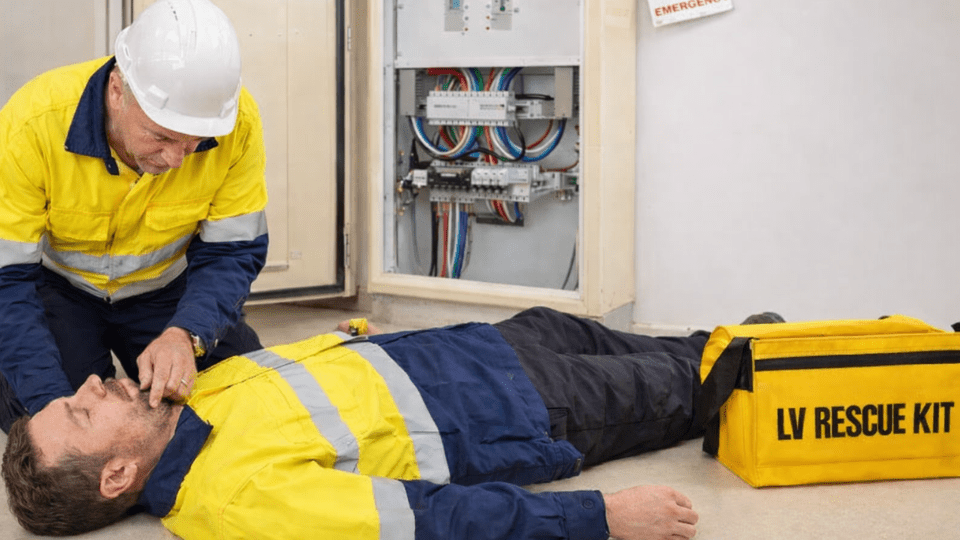
National Skills Week Celebrates Practical Skills That Keep Australia Moving
Most vocational skills are, by design, specific. A refrigeration mechanic’s qualification doesn’t help much in a warehouse, and a barista’s latte art won’t get a truck licensed for the road. First aid breaks that pattern. The steps for managing a cardiac arrest, treating a burn, or recognising anaphylaxis don’t change because the person administering them works in mining instead of marketing. What changes is the context — the equipment nearby, the time it takes for paramedics to arrive, the specific hazards that make an incident more or less likely — but the underlying skill is identical wherever it’s used.
That portability has real value for both workers and employers. For an individual, a nationally recognised qualification such as HLTAID011 Provide First Aid sits on a resume the same way regardless of which sector hires them next. For a business, it means training investment isn’t wasted if a staff member moves between departments or the company pivots into new work. Few other credentials carry that kind of universal currency, and it’s precisely the sort of practical, self-reliant capability that National Skills Week exists to put a spotlight on — skills that are learned quickly, applied immediately, and useful for life.
There’s also a less obvious benefit that tends to get overlooked in the compliance conversation: first aid builds confidence and calm under pressure, and that composure doesn’t switch off when the first aid kit closes. Workers who’ve trained to assess a situation, act decisively and communicate clearly in an emergency tend to carry those habits into everyday problem-solving, which is part of why so many employers treat first aid training as a genuine leadership development tool rather than a box-ticking exercise.

What the Numbers Actually Say About Workplace Injury in Australia
It’s tempting to think of workplace first aid as something that matters mostly for tradies on building sites. The national data tells a more layered story.
National injury data indicate that workplace harm remains both significant and concentrated in a small number of industries. The ABS Work-related injuries survey found that 497,300 people, or 3.5% of those who worked at some time during 2021–22, experienced a work-related injury or illness, down from 4.2% in 2017–18; the survey also found an overall injury rate of 35.3 injuries per 1,000 people who worked in the previous 12 months. Safe Work Australia’s latest compensation-based data show 146,700 serious workers’ compensation claims in 2023–24, equivalent to more than 400 claims per day, with 61% of serious claims concentrated in six industries: agriculture, forestry and fishing; public administration and safety; transport, postal and warehousing; manufacturing; health care and social assistance; and construction.
Age is another factor worth understanding. Older workers are involved in fewer incidents overall, but when something does happen to them, it tends to be more serious and takes longer to recover from — median time off work for a workplace injury has climbed over the past ten years, partly because a growing share of claims now involve extended recovery periods of thirteen weeks or more.
Mental health conditions are also an increasingly significant part of the picture, now accounting for over one in ten serious claims nationally, with average time off work running several times longer than for physical injuries.
First aid is one of those skills you hope you’ll never need—but when an emergency does happen, having someone nearby with current training can make all the difference. Whether you’re refreshing existing qualifications or training your team for the first time, a nationally accredited express first aid course with FAP First Aid provides the practical, hands-on knowledge and confidence to respond when it matters most. Investing in first aid training isn’t simply about meeting workplace obligations—it’s about creating safer workplaces, protecting your people and equipping every employee with a skill that can make a lasting difference both at work and in everyday life.
Compliance Snapshot: What First Aid Actually Looks Like By Industry

Under the model Work Health and Safety laws, every business in Australia has a duty to provide access to first aid equipment, facilities and trained personnel. What that obligation looks like in practice, though, shifts considerably depending on the industry. Safe Work Australia’s Code of Practice on first aid uses a simple risk-based framework — generally one trained first aider for every 50 workers in lower-risk environments, and one for every 25 workers where the hazards are more serious — but the code of practice also expects businesses to look past the ratio and think about the actual nature of their work based on a risk assessment.
- Construction: Classed as high risk under the Code of Practice, largely due to falls from height, mobile plant and manual handling injuries. Construction sites typically need first aiders trained to manage trauma, fractures and severe bleeding, positioned across different work zones rather than concentrated in one office, and refreshed regularly given how quickly crews and subcontractors rotate through a site.
- Healthcare and social assistance: Despite the presence of clinical staff, healthcare workplaces still carry first aid obligations for non-clinical incidents, occupational violence, and situations involving visitors or family members rather than patients under direct care. With this sector recording the highest volume of serious claims of any industry nationally, coverage across every shift — including nights and weekends — is essential rather than optional.
- Manufacturing: Another high-risk category, driven by exposure to machinery, hazardous substances and repetitive manual tasks. Shift-based operations need first aid cover calculated per shift rather than across the total headcount, since a factory running three shifts of twenty workers each genuinely needs a trained first aider on every shift, not just one for the whole roster.
- Hospitality and retail: Generally sits in the lower-risk category for internal staffing purposes, but these are also public-facing environments with high foot traffic, which the Code of Practice specifically flags as a reason to consider extra first aid coverage — incidents involving customers or patrons are just as real a responsibility as those involving staff.
- Office and corporate environments: The lowest-risk category under the framework, with hazards typically limited to slips, trips and ergonomic strain. The one-per-50 ratio usually applies here, though larger campuses or multi-floor buildings still need to think about how quickly a trained first aider can actually reach an incident, not just whether one exists somewhere in the building.
What ties every one of those industries together is that the obligation isn’t satisfied by having a first aid kit gathering dust in a cupboard. Regulators expect businesses to have actually assessed their risks and trained the right number of people to the right standard for their specific environment — which is exactly the gap that a group booking of Express Workplace First Aid Training is designed to close quickly, without pulling an entire team off the floor for a full day.
Why This Matters More During National Skills Week
National Skills Week exist to challenge the idea that vocational skills are somehow a lesser or narrower path than academic ones. Workplace first aid is a perfect example of the opposite being true. It’s a genuinely portable, nationally recognised competency that takes only hours to gain, applies across every sector of the economy, and can be the difference between a workplace incident becoming a minor delay or a tragedy. Businesses that use National Skills Week as a prompt to review their first aid coverage — rather than waiting for an incident, an audit, or a certificate quietly lapsing — tend to end up with teams that are not just compliant on paper, but genuinely prepared.
That’s the practical starting point for most organisations: work out how many trained first aiders your risk profile actually requires, check who on your team is due for renewal, and look at whether your current coverage holds up across every shift and location. From there, booking accredited Express Workplace First Aid Training with FAP First Aid is a straightforward way to close the gap — same-day certificates, a blended delivery model that keeps staff off the training room floor for as little time as possible, and courses built specifically around the compliance requirements outlined above.
Related reading
- Safe Work Australia – Key Work Health and Safety Statistics Australia 2025
- Safe Work Australia – Model WHS Regulations
- National Skills Week website
- Fast First Aid – What Is HLTAID011? Your Complete Guide to the HLTAID011 Provide First Aid Course
FAQ
What is National Skills Week?
National Skills Week is an annual Australian initiative from August 24 – 30, that promotes vocational education, practical skills and career pathways while recognising the important contribution skilled workers make to the nation’s economy.
Why is workplace first aid considered a transferable skill?
Unlike many industry-specific qualifications, first aid knowledge is relevant across almost every occupation. The skills can be applied in offices, schools, factories, construction sites, retail businesses, healthcare settings and many other workplaces.
Which workplaces need trained first aiders?
How often should workplace first aid training be renewed?
The Australian Resuscitation Council recommends refreshing CPR skills every 12 months. Nationally recognised first aid qualifications are typically renewed every three years to maintain current knowledge and practical competency.
Can workplace first aid training be delivered at our business?
Yes. Many organisations choose on-site workplace first aid training because it allows employees to train together in a familiar environment while reducing travel time and workplace disruption.