
What is Early Childhood Educators Day?
Early Childhood Educators Day is a national thank you to the people who educate and care for Australia’s youngest children. The date is the first Wednesday of September every year, which makes it Wednesday 2 September in 2026. The 2026 theme is The Future Starts With Us.
The event was started in Brisbane in 2011 by the Australian Childcare Alliance. The founders took the idea from World Teachers’ Day, and more services have taken part each year since. The Australian Childcare Alliance releases free printables, videos, and social media resources for services who want them, and it uses the day to raise public awareness of early childhood education. The point of the day is to recognise the role educators play in giving young children a good start in life.
The Job Beyond Learning and Play
Families celebrate Early Childhood Educators Day for the songs, the paintings, and the play, but those are the visible part of a much longer list. An educator’s day also includes nappy changes, sunscreen, medication doses recorded with the time given, allergy checks at every meal, sleep and rest checks, hand washing routines, and written incident reports. Those hours land in the first five years, which is the stretch of childhood where learning and development move fastest.
Educators also notice things, a skill more than a personality trait. They see the child who has gone quiet, the rash on a toddler’s arm, the limp that was not there at drop off, or the change in a child’s breathing since morning tea. How quickly a parent gets a phone call depends on what they do with that information.
The other part of the job is the one nobody wants. A child can choke on a grape, react to an egg for the first time, or hit their head on a corner, and the adult in the room is the first responder. Paramedics can take minutes to get there, and a small child can deteriorate inside those minutes. That is the part of the job families are thanking when they celebrate Early Childhood Educators Day, even when nobody says so out loud.
The Safety Standards for Australian Education And Care Services
Families who celebrate Early Childhood Educators Day thank people who work to a national set of rules. Every long day care centre, family day care home, preschool, and outside school hours service in Australia is checked and rated by a government authority in its own state or territory, and children’s health and safety is one of the seven areas they are rated on. The rating is public, so a parent can look up any service before enrolling.
Someone qualified in first aid has to be at the service the whole time children are there, and close enough to help immediately. Training in asthma emergencies and training in severe allergic reactions are required on the same terms, and one person can cover all three. In family day care, the educator looking after the children has to hold all three personally. There is nobody else in the house to fall back on.
Supervision As The First Layer Of Child Protection

Supervision is not the part of early learning jobs people picture when they celebrate Early Childhood Educators Day. Every child in an education and care service must be adequately supervised at all times, which means educators can respond immediately when a child is distressed or in a hazardous situation, and that they know where every child is and are actively watching what those children do.
Minimum staffing numbers support that. The minimum is one educator to four children from aged up to 24 months, one to five for children over 24 months and under 36 months, one to eleven from 36 months to preschool age, and one to fifteen above preschool age. Twelve children under two therefore need three educators, and they need them for every minute those children are present. A family day care educator can care for seven children at once, with no more than four of them preschool age or under.
Premises have to be laid out and maintained so educators have a clear line of sight over children, including toilets, nappy change areas, and sleep and rest spaces. During sleep and rest, an educator within sight and hearing of sleeping children can check that each child’s wellbeing.
Ways to Get Involved and Celebrate Early Childhood Educators Day 2026
Celebrating Early Childhood Educators Day 2026 doesn’t take money or a planning committee. A card written by a four year old does as much as a catered lunch. Families who want something more organised can talk to their service first. The team knows what its own people would enjoy. Some practical ways to get involved are:
- Make handmade cards with the children at home
- Set up an appreciation wall in the foyer
- Put on a morning tea for the team
- Give a small gift chosen by your child
- Take the time to say thank you in person at pick up
- Post a message on the service’s social media page
- Name one specific thing an educator did in a note to the service
The Provide First Aid In An Education And Care Setting Course
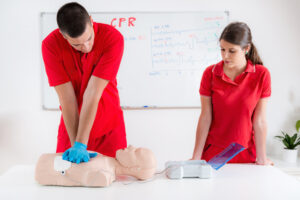
Training is one of the less sentimental celebrations for Early Childhood Educators Day, but it lasts three years, not just one day. An educator who completes our HLTAID012 course knows what to do in the minutes before paramedics get there.
Our students include long day care educators, family day care educators, preschool staff, and outside school hours care teams. Enrol in our HLTAID012 Provide First Aid in an Education and Care Setting course before Wednesday 2 September and your certificate stays current for the next three years of the job. It is a straightforward way to celebrate Early Childhood Educators Day 2026 with something that lasts beyond morning tea.
FAQs
What Happens if No One at a Service Holds a First Aid Qualification?
The service is in breach of the national regulations, which set a penalty of $2,200. Its enforcement falls to the education and care regulator for that state or territory, such as the Education Standards Board in South Australia or Children’s Education and Care Assurance in the ACT.
Who Can Enrol in HLTAID012 Training?
Anyone can enrol in this training, regardless of whether they work in early learning services. Childcare first aid training is just as ideal for family members, babysitters, nannies, and anyone who spends time with or looks after young children.
Where Can I Look Up a Service's Rating?
The Australian Children’s Education and Care Quality Authority publishes national registers of approved services and providers, at startingblocks.gov.au. The registers are updated daily from the system the state and territory regulators work in.