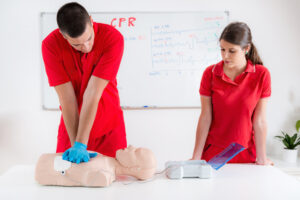
Electricians work in one of Australia’s most hazardous trades. Electrical shock, burns, cardiac arrest, and falls from heights are genuine occupational risks. If an electrical incident occurs on your job site and someone collapses from ventricular fibrillation, the first few minutes are critical. This is why first aid certification is not just recommended for electricians: it is sometimes required by law and often mandated by licensing bodies and clients.
WHS Legal Requirements for Electricians
Yes, electricians need a first aid certificate. The requirement stems from two legal obligations:
- Employer Duty: Under the Work Health and Safety Act 2011, employers must provide and maintain adequate first aid facilities and trained personnel for their workers. If you employ electricians, you must ensure first aid provision is available on all job sites.
- Safe Work Australia Code of Practice: The Code of Practice for First Aid in the Workplace specifies that designated first aiders must hold HLTAID011 (Provide First Aid). For trade workplaces like electrical sites, this is the mandatory standard.
Even if you are a sole trader electrical contractor, you have a duty to ensure first aid provisions are accessible. In practice, this means holding a current first aid certificate yourself or having someone on site who does.

State Licensing and Electrical Authority Requirements
Beyond WHS obligations, state electrical licensing bodies often reference first aid certificate requirements for electrical workers and contractors.
Victoria
Energy Safe Victoria and the ESA require electrical contractors to have first aid provisions compliant with the WHS Act.
Queensland
The Electrical Safety Office requires contractors to meet WHS standards, including appropriate first aid provision.
New South Wales
Safe Work NSW enforces WHS requirements, while electrical licensing boards reference these obligations in contractor requirements.
SA, WA, TAS and NT
Similar frameworks apply across these jurisdictions, with local WorkSafe bodies enforcing WHS compliance.
Many electrical contracting companies and large construction sites now require subcontractors and workers to present a current HLTAID011 certificate as a condition of site access. Large projects, government contracts, and critical infrastructure work almost always demand it.
Why A First Aid Certificate is Especially Critical for Electricians
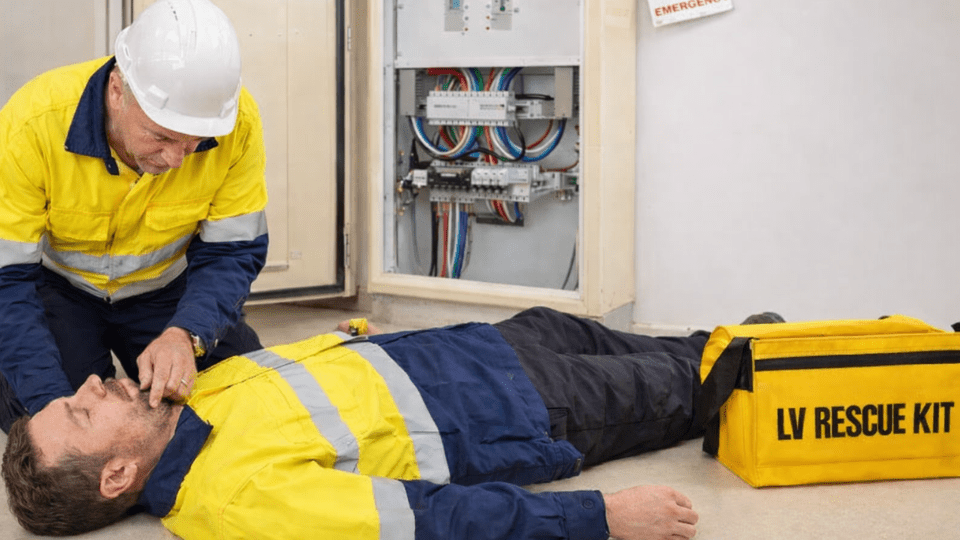
Electrical work creates specific hazard profiles that make first aid knowledge urgent:
Cardiac Arrest Risk: Electrocution can cause immediate cardiac arrhythmia. If a worker collapses due to electrical shock, early CPR and defibrillation can be lifesaving. The golden window is minutes, not hours.
Burns: Electrical burns often affect multiple tissue layers and are prone to serious complications. Immediate first aid to cool burns and prevent contamination is essential.
Trauma: Falls from height during electrical work on poles, roofs, or scaffolding can cause spinal injury, head trauma, and internal bleeding. A trained first aider can assess and stabilise a casualty, reducing the risk of permanent disability.
Remote Work: Electricians often work on isolated sites or in confined spaces. A first aid certificate means you can self-manage an emergency and provide aid to colleagues while waiting for an ambulance to navigate to a difficult location.
For these reasons, HLTAID011 is not just a legal tick-box for electricians: it is a genuine safety skill that can help prevent fatalities.
What Does HLTAID011 Cover?
HLTAID011 (Provide First Aid) is the standard first aid qualification for electrical workers and tradespersons. It includes:
CPR and AED Use
Hands-on training in chest compressions, rescue breathing, and defibrillator operation.
Severe Bleeding and Wound Management
How to control life-threatening bleeding and help prevent infection.
Shock
Recognition and management of physical shock and anaphylactic shock.
Choking and Airway Obstruction
Techniques to relieve choking and manage airway compromise.
Unconscious Casualty Care
Recovery position, monitoring, and prevention of aspiration.
Fractures and Musculoskeletal Injury
Immobilisation, splinting, and pain management.
Burns and Scalds
Treatment protocols specific to thermal and electrical burns.
The course combines online pre-learning (self-paced) and a 60-minute face-to-face practical session where you practise CPR, AED use, bandaging, and casualty management on manikins and under supervision.
Certificate Validity and Renewal
HLTAID011 is valid for 3 years. However, maintaining compliance requires an additional step: annual CPR top-ups.
Even if your HLTAID011 is current, you must complete HLTAID009 (CPR) every 12 months. This is a short (typically 30 minutes) refresher in CPR and AED use. It ensures your CPR skills remain sharp and your knowledge of any protocol updates is current.
For electricians who move between sites and clients, maintaining both certifications is essential for continued site access and contract compliance.
How to Complete HLTAID011 Without Losing Work Days
Many electricians hesitate to pursue first aid training because they assume it requires a full day away from the job. This is not the case.
FAP First Aid delivers express HLTAID011 courses with the online pre-learning completed by you at your own pace (typically 1-2 hours), followed by a single 60-minute practical session. Because the practical is just one hour, you can:
- Schedule it during a lunch break or between jobs
- Attend on a Saturday or Sunday (courses run 7 days a week)
- Complete it after hours if needed
At $109 for the full HLTAID011 course, it is an affordable investment that pays for itself in reduced insurance risk and improved site access.

Licensing and Client Requirements
If you hold an electrical license or operate under a contracting license, check your conditions. Many licenses include references to complying with WHS requirements, which implicitly require first aid provision.
Larger electrical contracting companies often mandate that all workers hold HLTAID011 and maintain current CPR. Before accepting a subcontracting role or tendering for a large project, ask whether first aid certification is required. Often it is, and you’ll need to provide proof of currency before starting work.
Action Steps for Electricians
Check Your Current Status
Do you hold a current HLTAID011? Is your CPR certificate, HLTAID009, current within the last 12 months?
Review Your Contracts and Licences
Check any contracting agreements or licence conditions that reference first aid requirements.
Book Your Course
If you do not hold HLTAID011, book an express course at FAP First Aid. Courses are available 7 days a week, and you can be certified within days.
Set a Renewal Reminder
Mark your calendar for HLTAID011 renewal every 3 years and CPR top-up every 12 months.
Ask Clients About Site Requirements
On your next job, confirm whether the client or site manager has first aid requirements. A current certificate helps ensure you are not locked out of work.
Related reading
- Safe Work Australia – First Aid in the Workplace Code of Practice
- Safe Work Australia – Model Code of Practice: Managing Electrical Risks in the Workplace
- Energy Safe Victoria – Electrical Safety and Contractor Responsibilities
- Electrical Safety Office Queensland – Electrical Safety for Workers and Contractors
- First Aid Pro – UETDRMP018 Perform Rescue From A Live Low Voltage Panel
FAQ
Do electricians need a first aid certificate in Australia?
Yes. The WHS Act 2011 requires employers to provide adequate first aid, and the Safe Work Australia Code of Practice specifies that designated first aiders must hold HLTAID011 (Provide First Aid). Additionally, many state electrical licensing bodies and clients require electricians to hold current first aid certification.
What first aid certificate do electricians need?
Electricians need HLTAID011 (Provide First Aid), not just CPR. HLTAID011 covers CPR, AED use, severe bleeding, shock, burns, fractures, choking, and other injuries specific to workplace emergencies. It is the standard qualification required by WHS law for designated first aiders.
Why is first aid certification critical for electricians?
Electrical work carries specific hazards: electrocution can cause immediate cardiac arrest, electrical burns require specialist first aid, and falls from height during electrical work are common. Early CPR and appropriate first aid can be lifesaving. Many electricians also work remotely or in isolated areas where first aid knowledge is essential.
How long is HLTAID011 valid for electricians?
HLTAID011 is valid for 3 years. However, CPR knowledge must be refreshed annually. Even if HLTAID011 is current, you must complete HLTAID009 (CPR) every 12 months to maintain compliance with workplace first aid requirements.
Can electricians complete first aid training without losing work time?
Yes. FAP First Aid offers express HLTAID011 courses with online pre-learning and a 60-minute face-to-face practical. Courses are available 7 days a week, and the practical can be scheduled during a lunch break, after hours, or on weekends. At $109, it is affordable and flexible.