Anaphylaxis is a severe, life-threatening allergic reaction that can develop within minutes of exposure to a trigger. Without immediate treatment, it can be fatal. With prompt anaphylaxis first aid and adrenaline, most people recover fully.
Knowing how to recognise anaphylaxis and respond correctly is a skill that genuinely saves lives. This guide explains what to look for, what to do, and how to use an adrenaline auto-injector (EpiPen) when needed.
What Is Anaphylaxis?
Anaphylaxis is an extreme allergic response where the immune system releases chemicals that flood the body. These chemicals cause a cascade of reactions including widespread inflammation, blood pressure drop, and airway narrowing, which can lead to life-threatening breathing difficulties and circulatory collapse.
It differs from a mild allergic reaction (such as hives or a runny nose) in both speed and severity. Anaphylaxis typically affects multiple body systems at once and can progress from first symptoms to life-threatening within 15 to 30 minutes.
Common Triggers
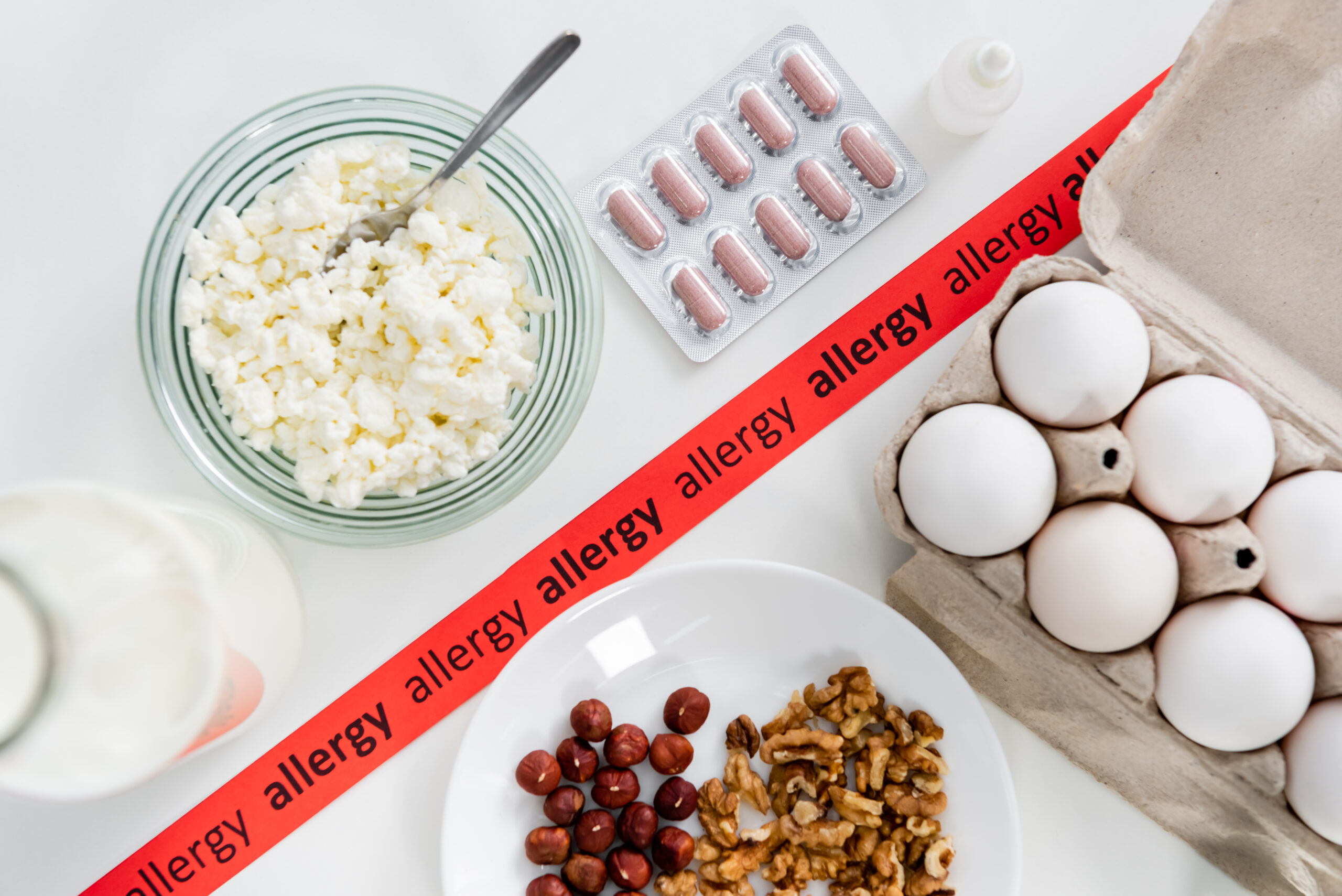
The most common triggers of anaphylaxis in Australia include:
- Food allergens: peanuts, tree nuts, shellfish, fish, milk, eggs, wheat, sesame
- Insect stings: bees, wasps, jack jumper ants (particularly in south-eastern Australia)
- Medications: penicillin and other antibiotics, aspirin, ibuprofen, contrast agents
- Latex: certain medical or dental equipment, rubber gloves
- Exercise-induced: rare, but exercise combined with food triggers can induce anaphylaxis
Some people with known severe allergies carry an action plan and adrenaline auto-injector at all times. Others may not know they have a severe allergy until their first reaction.
Signs and Symptoms of Anaphylaxis
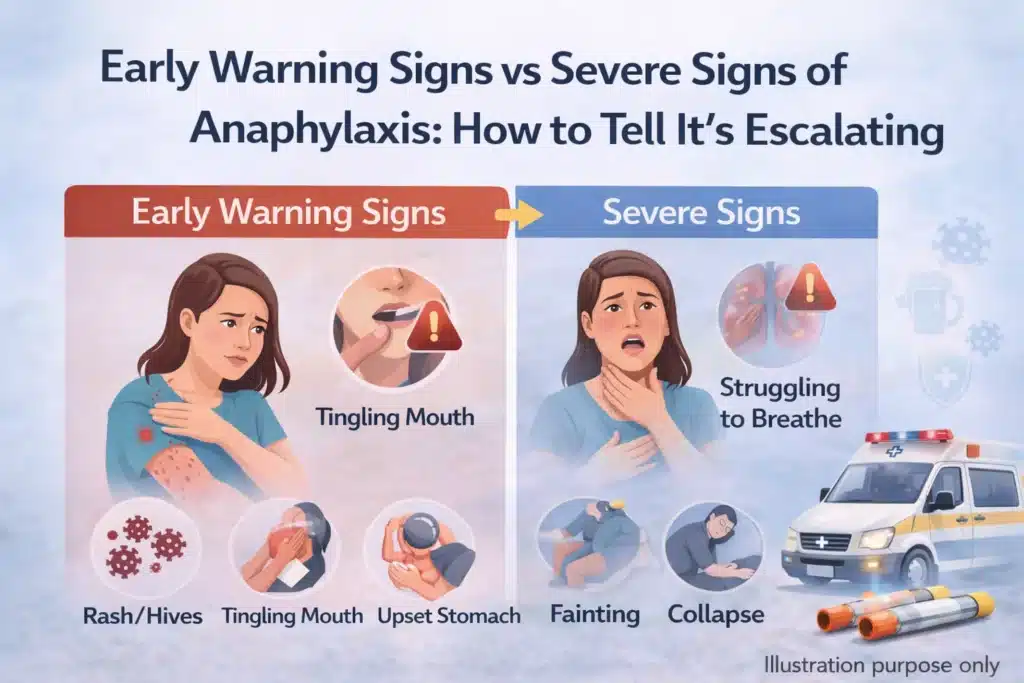
Anaphylaxis typically involves symptoms across multiple body systems. Recognise it by looking for combinations of the following:
Skin and mouth:
- Hives, itching, or skin redness
- Swelling of the lips, tongue, or face
- Tingling or metallic taste in the mouth
Breathing and throat:
- Noisy breathing or wheeze
- Throat tightness or hoarseness
- Difficulty swallowing
- Stridor (high-pitched sound on inhaling)
Circulation and general:
- Pale or flushed skin
- Rapid or weak pulse
- Dizziness, lightheadedness, or collapse
- Loss of consciousness
Digestive:
- Nausea, vomiting, or abdominal cramping
A reaction that involves the throat or causes breathing difficulty, or that leads to collapse or loss of consciousness, should always be treated as anaphylaxis regardless of how it started.
First Aid for Anaphylaxis: Step by Step
Step 1: Lay the person down
If the person is conscious, lay them flat with their legs raised (to improve blood flow to vital organs). If they are having difficulty breathing, allow them to sit up or adopt a position that helps their breathing.
Do not let them stand or walk. Standing can cause rapid blood pressure drop.
If they lose consciousness and are breathing, place them in the recovery position.
If they stop breathing, begin CPR immediately and follow the DRSABCD action plan.
Step 2: Give adrenaline (EpiPen) if available
If the person has a known allergy and carries an adrenaline auto-injector (EpiPen, Anapen, or Emerade), administer it immediately. Do not wait for symptoms to worsen.
To use an EpiPen:
- Remove the blue safety cap
- Hold the auto-injector in your dominant hand (orange tip pointing down)
- Press the orange tip firmly against the outer mid-thigh (can be administered through clothing)
- Hold in place for 3 seconds until you hear a click
- Remove and massage the injection site for 10 seconds
- Note the time of administration
Adrenaline begins working within minutes. It is safe to administer. The risk of not giving adrenaline in suspected anaphylaxis is far greater than the risk of giving it unnecessarily.
Step 3: Call 000 immediately
Call Triple Zero whether or not adrenaline has been given. Even if symptoms appear to improve after the EpiPen, the person needs immediate hospital assessment. Anaphylaxis can have a biphasic reaction, where symptoms return 4 to 12 hours later without further allergen exposure.
Tell the dispatcher:
- Suspected anaphylaxis
- Whether adrenaline has been given and the time
- The person’s condition right now
- Your exact location
Step 4: Give a second dose if needed
If there is no improvement after 5 minutes and a second auto-injector is available, administer it in the opposite thigh. Some action plans specify two-injector protocols for severe reactions.

Step 5: Monitor and be ready to perform CPR
Stay with the person until emergency services arrive. Be ready to perform CPR if they lose consciousness and stop breathing.
Do not leave them alone, even if they appear to be improving.
Anaphylaxis in Children
Children are at particular risk from food-triggered anaphylaxis. In childcare and school environments, staff should be familiar with:
- Individual management plans for children with known severe allergies
- The location of the child’s EpiPen (typically in a labelled kit in a central location)
- Correct EpiPen technique for children (same as adults, outer mid-thigh)
- The EpiPen Junior (0.15 mg) for children under 20 kg
HLTAID012 (Childcare First Aid) specifically covers anaphylaxis management in an education and care setting, including ACECQA requirements. Learn more about HLTAID012.
Mild Allergic Reaction vs Anaphylaxis
Not every allergic reaction is anaphylaxis. Here is how to distinguish them:
Mild reaction | Anaphylaxis |
|---|---|
Localised hives or itching | Widespread hives, swelling of face or throat |
Watery eyes, runny nose | Airway symptoms: wheeze, stridor, difficulty swallowing |
No breathing difficulty | Breathing difficulty or throat tightness |
No collapse | Dizziness, faintness, collapse |
Responds to antihistamine | Requires adrenaline |
If you are in any doubt, treat as anaphylaxis and administer adrenaline. A mild reaction treated with adrenaline causes minimal harm. Anaphylaxis not treated with adrenaline can be fatal.
Getting First Aid Trained
Understanding anaphylaxis conceptually and being trained to respond to it in practice are different skills. FAP First Aid (RTO 46449) includes anaphylaxis recognition and response in all first aid courses:
- HLTAID011 Express First Aid: 60-minute practical, includes anaphylaxis scenarios, $109
- HLTAID012 Express Childcare First Aid: 90-minute practical, includes paediatric anaphylaxis and EpiPen technique, $129
Sessions run 7 days a week across Australia.
Related reading
FAQ
What is the first aid treatment for anaphylaxis?
Lay the person flat with legs raised. Administer adrenaline (EpiPen) immediately if available. Call 000. Monitor closely and be prepared to perform CPR.
How quickly does anaphylaxis develop?
Within minutes of exposure. Symptoms can progress from mild to life-threatening in 15 to 30 minutes. Immediate action is essential.
What is the difference between a mild allergic reaction and anaphylaxis?
A mild reaction involves localised symptoms and does not affect breathing or circulation. Anaphylaxis involves multiple body systems, causes breathing difficulty or throat swelling, and can lead to collapse. When in doubt, treat as anaphylaxis.
What training covers anaphylaxis first aid in Australia?
HLTAID011 (First Aid) and HLTAID012 (Childcare First Aid) both include anaphylaxis recognition and response. HLTAID012 provides more comprehensive paediatric training and is required for childcare workers under ACECQA.
Can you give an EpiPen to someone without a prescription?
In Australia, trained first aiders can administer an EpiPen to someone experiencing anaphylaxis under the principle of medical emergency exemption. Always call 000 after administering adrenaline.