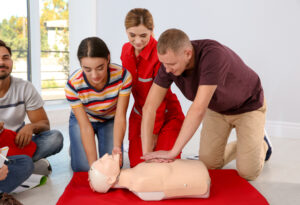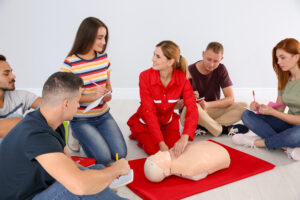
World First Aid Day 2026 falls on Saturday, 12 September, making it a timely ‘Spring Cleaning’ opportunity for Australian businesses to check whether their workplace first aid arrangements are actually up to standard. Workplace first aid compliance involves more than keeping a first aid kit in the kitchen. Employers need appropriate first aid equipment and facilities, access to trained first aiders, clear procedures and arrangements that reflect the hazards, size, location and workforce of their workplace. (Safe Work Australia)
For many businesses, the reassuring part is that the basics are not complicated. The challenge is making sure they are maintained. A first aid certificate expires. Supplies get used. Staff leave. Teams grow. Rosters change. A first aid kit that was perfectly adequate three years ago may no longer suit the workplace today.
World First Aid Day provides a useful reason to stop and check.
At FAP First Aid, nationally recognised first aid and CPR training can help workplaces ensure their designated first aiders have the skills to respond when an emergency happens.
Key Takeaways
- Australian workplaces must provide access to appropriate first aid equipment, facilities and trained first aiders.
- Safe Work Australia recommends one first aider for every 50 workers in low-risk workplaces and one for every 25 workers in high-risk workplaces, with different considerations for remote high-risk workplaces.
- First aid kits need to be accessible, appropriate to workplace risks, maintained and restocked.
- CPR refresher training is recommended annually, while first aid qualifications should generally be renewed every three years.
- First aid arrangements should be reviewed when workplace risks, staffing, locations or work practices change.

What Is World First Aid Day?
World First Aid Day is observed on the second Saturday of September each year. Established by the International Federation of Red Cross and Red Crescent Societies (IFRC), it promotes awareness of first aid and the role non-medical people can play when somebody becomes seriously ill or injured.
The IFRC reports that it and its National Societies reach more than 50 million people each year through activities promoting and celebrating first aid.
In 2026, World First Aid Day falls on Saturday, 12 September.
It is easy to associate first aid awareness with learning CPR, treating bleeding or knowing what to do when somebody is choking. Those skills matter enormously. In the workplace, however, World First Aid Day also presents a useful compliance question:
If somebody needed first aid at work today, would your organisation be ready?
Here is a five-point check
1. Do You Have Enough Trained First Aiders?

Having someone in the business who completed first aid training several years ago is not necessarily an adequate workplace first aid arrangement.
Under the model WHS framework, a person conducting a business or undertaking (PCBU) must ensure that an adequate number of workers are trained to administer first aid, or that workers have access to an adequate number of other trained people. First aiders should hold nationally recognised Statements of Attainment issued by a Registered Training Organisation.
How many do you need?
Safe Work Australia recommends:
- Low-risk workplaces: one first aider for every 50 workers.
- High-risk workplaces: one first aider for every 25 workers.
- Remote high-risk workplaces: one first aider for every 10 workers. (Safe Work Australia)
These are recommended ratios rather than a universal headcount formula that automatically determines compliance in every Australian workplace.
Your first aid needs should be established through a risk assessment considering the nature of the work, workplace hazards, size and location, as well as the number and composition of people who may be present. Contractors, subcontractors, volunteers and visitors can also be relevant.
Rosters matter too.
Having four qualified first aiders on your staff list is not much help if all four work the same shift. Workers should be able to access trained first aiders whenever they are working, including during night shifts, overtime or work outside the usual workplace.
For many workplaces, HLTAID011 Provide First Aid is the relevant nationally recognised first aid unit. HLTAID009 Provide cardiopulmonary resuscitation focuses specifically on CPR, while HLTAID012 Provide First Aid in an education and care setting is designed for people working in education and care environments. All three units are currently listed on Australia’s National Training Register. (Training.gov.au)
If your first aider coverage looks thin, FAP First Aid can help your team complete recognised first aid and CPR training.

2. Is Your First Aid Kit Suitable, Accessible and Stocked?
Now find your first aid kit.
Not where you think it is. Actually find it.
Could a new employee locate it quickly? Is it accessible without finding somebody with a key? Is everything inside usable? Are sterile products sealed? Have frequently used supplies been replaced?
Australian workplaces must provide access to at least one first aid kit. Larger or spread-out workplaces may need additional kits so workers can access equipment quickly. Work vehicles may also require kits where employees travel as part of their work.
There is no single kit configuration suitable for every workplace because the contents should reflect the risks.
An office and a metal fabrication workshop do not present identical hazards. A workplace involving hot surfaces or fire, for example, may require additional supplies for burns. Work involving chemicals, flying particles or machining may require additional equipment for eye injuries. Remote workplaces can require further equipment again. (Federal Register of Legislation)
Safe Work Australia’s model Code recommends that kits be immediately identifiable, protect their contents from contamination and contain an inventory. Kits should be positioned prominently and close to areas where injuries are more likely to occur.
Someone should also be responsible for maintaining them.
The model Code recommends replacing used items as soon as practicable and checking kits after use. If a kit has not been used, it recommends checking it at least once every 12 months, including expiry dates and the condition of sterile products.
A sealed box labelled “FIRST AID” is not much protection if half its contents expired years ago.

Can Workers Quickly Find First Aid Equipment and First Aiders?
Imagine an employee collapses in the warehouse. A colleague calls Triple Zero (000), but nobody knows where the first aid kit is. Someone thinks the first aider is “probably in accounts”. Another employee remembers seeing an AED somewhere near reception.
Those lost minutes matter.
Safe Work Australia states that workers must be given information about first aid so they know what to do and who to contact if somebody becomes sick or injured. This should include the location of first aid equipment and facilities, the identity and location of trained first aiders, and the procedures workers should follow when first aid is required.
This information can be introduced during induction and updated when arrangements change.
Signage is part of making first aid visible. The model Code recommends first aid kits be clearly identifiable with a white cross on a green background. Emergency floor plans should also identify first aid kit locations where relevant.
Businesses should consider how employees will identify the people who can help. Safe Work Australia suggests options such as displaying first aider contact details or using distinctive high-visibility clothing where appropriate.
The test is straightforward: could somebody unfamiliar with the workplace quickly work out where to go and who to call?
If the answer is no, your first aid arrangements need attention.
4. Are First Aid Incidents Being Recorded?
Providing treatment is only part of a workplace first aid system.
What happens afterwards also matters.
Safe Work Australia’s model Code recommends keeping a record of first aid treatment provided and reporting this information to managers regularly. These records can help an organisation review its first aid arrangements and identify recurring problems.
Suppose employees repeatedly require first aid for minor cuts in one particular work area. Individually, the incidents may seem insignificant. Together, they could point to an equipment, procedural or PPE issue that needs investigation.
A workplace should therefore have a clear process for recording injuries, illnesses and first aid treatment.
That does not mean every Band-Aid automatically becomes a notifiable WHS incident. Requirements to notify a WHS regulator apply to specified serious incidents and are separate from ordinary internal first aid record-keeping.
Confidentiality also matters. Health information should be handled appropriately, and Safe Work Australia’s model Code specifically notes that information about workers’ health must be kept confidential and only provided to first aiders with the worker’s consent where applicable.
World First Aid Day is a good time to look at your records rather than simply checking whether the record book exists.
What have your first aid incidents been telling you?

Is Everyone's First Aid and CPR Training Current?
This is one of the easiest items to overlook. An employee completes first aid training, their certificate is filed away and everyone assumes that box has been ticked indefinitely.
First aid skills need to remain current.
Safe Work Australia’s model Code recommends that first aiders attend regular training to refresh their knowledge and skills. It specifically recommends CPR refresher training annually and renewal of first aid qualifications every three years.
That means workplaces should maintain a simple training register showing who is trained, which qualifications they hold and when refresher or renewal training is due. For many designated workplace first aiders, HLTAID011 Provide First Aid provides the broad first aid competency required for common emergencies.
HLTAID009 Provide cardiopulmonary resuscitation develops the skills and knowledge required to perform CPR in accordance with Australian Resuscitation Council guidelines and is particularly important because CPR skills should be refreshed annually.
For education and care environments, HLTAID012 Provide First Aid in an education and care setting provides training relevant to first aid responses involving children and infants as well as adults.
The right training should reflect the workplace. Safe Work Australia notes that additional training may be appropriate where, for example, work is remote or isolated, dangerous substances are involved, children are present or particular medical risks have been identified.
Rather than waiting for certificates to lapse, businesses can schedule training in advance. FAP First Aid provides nationally recognised first aid and CPR training to help workplaces keep their first aiders’ skills current.
First Aid Compliance Starts With a Workplace Risk Assessment
A useful theme runs through all five checks: first aid arrangements should match the actual workplace.
Safe Work Australia recommends using a first aid risk assessment to determine requirements for equipment, facilities and training.
Consider what could realistically happen at your workplace.
An office may primarily deal with slips, falls, sudden illness and medical emergencies. A warehouse may add forklifts, manual handling and machinery risks. A construction workplace may involve power tools, heights, electricity and significant trauma. Remote workers face another challenge entirely: professional medical assistance may take much longer to arrive.
The number of workers matters, but so do the people who may enter the workplace, where they work, the shifts they work and how quickly emergency services can reach them.
That is why simply purchasing a generic first aid kit and nominating an employee as “the first aider” is not a complete first aid strategy.
Don't Forget to Review Your Arrangements
Compliance is not a once-only exercise.
Safe Work Australia recommends reviewing first aid arrangements regularly and consulting workers as part of the risk assessment process.
A review is particularly sensible when circumstances change.
Perhaps your business has doubled its workforce. You have opened another floor, introduced a night shift, purchased new machinery or started sending employees to remote locations. Perhaps the only trained first aider has resigned.
Any of those changes could alter what adequate first aid looks like. Even without a major change, periodic reviews help identify the small gaps that gradually appear: expired supplies, outdated contact lists, inaccessible kits or certificates approaching renewal.
A Note About Australian Workplace First Aid Laws
Safe Work Australia develops national WHS policy and the model WHS laws, but it is not the workplace safety regulator for individual businesses. Commonwealth, state and territory authorities regulate and enforce WHS requirements within their respective jurisdictions.
Likewise, Safe Work Australia’s model Code of Practice: First Aid in the Workplace provides detailed practical guidance, but a model Code needs to be approved in a jurisdiction to have legal effect there. Businesses should check the requirements applying through their relevant state, territory or Commonwealth WHS regulator. (Safe Work Australia)
That distinction matters when discussing “compliance”.
The recommended first aider ratios and other guidance provide an excellent benchmark, but employers still need to consider the legislation, regulations and approved codes applying to their workplace and the risks their workers actually face.
Make World First Aid Day Your Annual First Aid Check-Up
World First Aid Day does not need to be another awareness date that appears on the workplace calendar and disappears the following Monday.
Use it.
Walk through your workplace and locate every first aid kit. Check the contents. Confirm who your first aiders are and when their training expires. Look at each shift rather than just the staff list. Check your signs and emergency information. Review recent injury and first aid records.
Most importantly, ask whether the arrangements still fit the workplace you have today.
If your review identifies gaps in first aid or CPR training, FAP First Aid can help your team complete recognised training including HLTAID011 Provide First Aid and HLTAID009 Provide cardiopulmonary resuscitation, with appropriate training options for different workplace needs.
Businesses can also book a workplace first aid audit to review their current arrangements and identify areas requiring attention.
This World First Aid Day, the goal is not simply to say your workplace has first aid covered.
Make sure it actually does.
Related reading
Safe Work Australia — First Aid
Safe Work Australia — First AidSafe Work Australia — Model Code of Practice: First Aid in the Workplace
Model Code of Practice: First Aid in the WorkplaceTraining.gov.au — HLTAID011 Provide First Aid
HLTAID011 Provide First Aid — National Training RegisterTraining.gov.au — HLTAID009 Provide Cardiopulmonary Resuscitation
HLTAID009 Provide Cardiopulmonary Resuscitation — National Training RegisterInternational Federation of Red Cross and Red Crescent Societies — World First Aid Day
IFRC — First Aid and World First Aid Day
FAQ
When is World First Aid Day 2026?
World First Aid Day 2026 is Saturday, 12 September. World First Aid Day is held on the second Saturday of September each year and promotes awareness of the importance of first aid around the world.
How many first aiders should an Australian workplace have?
Safe Work Australia recommends one first aider for every 50 workers in a low-risk workplace, one for every 25 workers in a high-risk workplace, and one for every 10 workers in a remote high-risk workplace. These are recommended ratios. The appropriate number should be determined by considering workplace risks, size, location, workforce composition, working hours and access to emergency services. (Safe Work Australia)
How often should workplace first aid training be renewed?
Safe Work Australia’s model Code recommends that CPR refresher training be undertaken annually and that first aid qualifications be renewed every three years. Workplaces should maintain records so refresher and renewal dates are not missed. (Federal Register of Legislation)
What first aid course should a workplace first aider complete?
The appropriate training depends on the workplace and its risks. HLTAID011 Provide First Aid is a current nationally recognised unit commonly relevant to workplace first aiders, while HLTAID009 Provide cardiopulmonary resuscitation covers CPR. HLTAID012 Provide First Aid in an education and care setting is designed for education and care contexts. Some higher-risk, remote or specialised workplaces may require additional training. (Safe Work Australia)
What should be included in a workplace first aid compliance check?
A practical review should examine whether there are enough trained first aiders available across working hours, whether first aid kits are suitable and maintained, whether workers can quickly locate first aid equipment and first aiders, whether first aid treatment is recorded, and whether training and refresher dates are current. The review should also consider whether workplace hazards, staffing or working arrangements have changed since first aid needs were last assessed. (Safe Work Australia)